October 16, 2026 How to Match a Blog Post Claim to the Evidence Behind It Write the most direct claim the evidence can defend by labeling its support, matching the verb, and naming decision-changing uncertainty.
October 15, 2026 How to Address a Reader’s Objection Without Derailing the Blog Post Address an objection when it changes the main answer, respond to its strongest fair version, and stop when the article’s path is restored.
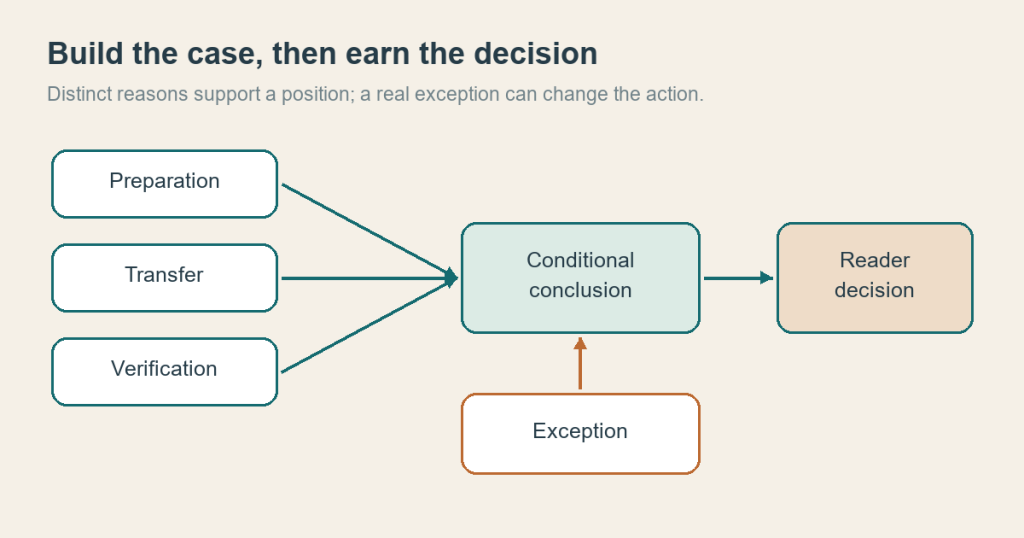
October 14, 2026 How to Build a Blog Post Argument the Reader Can Follow Connect your conclusion to distinct supporting reasons, examine the strongest fair exception, and finish with the decision your case earns.
October 14, 2026 How to Use an Analogy in a Blog Post Without Distorting the Idea Use one analogy to clarify a relationship, map its parts, name where the comparison stops, and return the reader to the real subject.
October 13, 2026 How to Write a Definition Post That Helps the Reader Use the Term Move beyond a dictionary-style definition with clear edges, a near miss, a recognition test, and a decision the reader can make.
October 12, 2026 What Should You Leave Out of a Blog Post? Use the One-Job Boundary Keep a blog post focused by giving it one reader job, testing every section against that job, and moving useful side material to a better home.
October 9, 2026 How to Choose the Right Blog Post Format for the Reader’s Question Choose tutorial, comparison, explainer, checklist, or reference format from the job the reader needs to complete.
October 8, 2026 How to Write a Valuable Blog Post When You Do Not Have Original Data Create value without proprietary data by giving sources clear jobs and adding an honest synthesis, distinction, or decision path.
October 7, 2026 How to Add a Caveat Without Burying the Answer State the normal answer clearly, name the condition that changes it, and give the affected reader a practical next step.
October 6, 2026 How to Write Instructions Readers Can Actually Follow Make instructions followable by naming prerequisites, actions, visible results, checkpoints, and a recovery path when a step does not work.