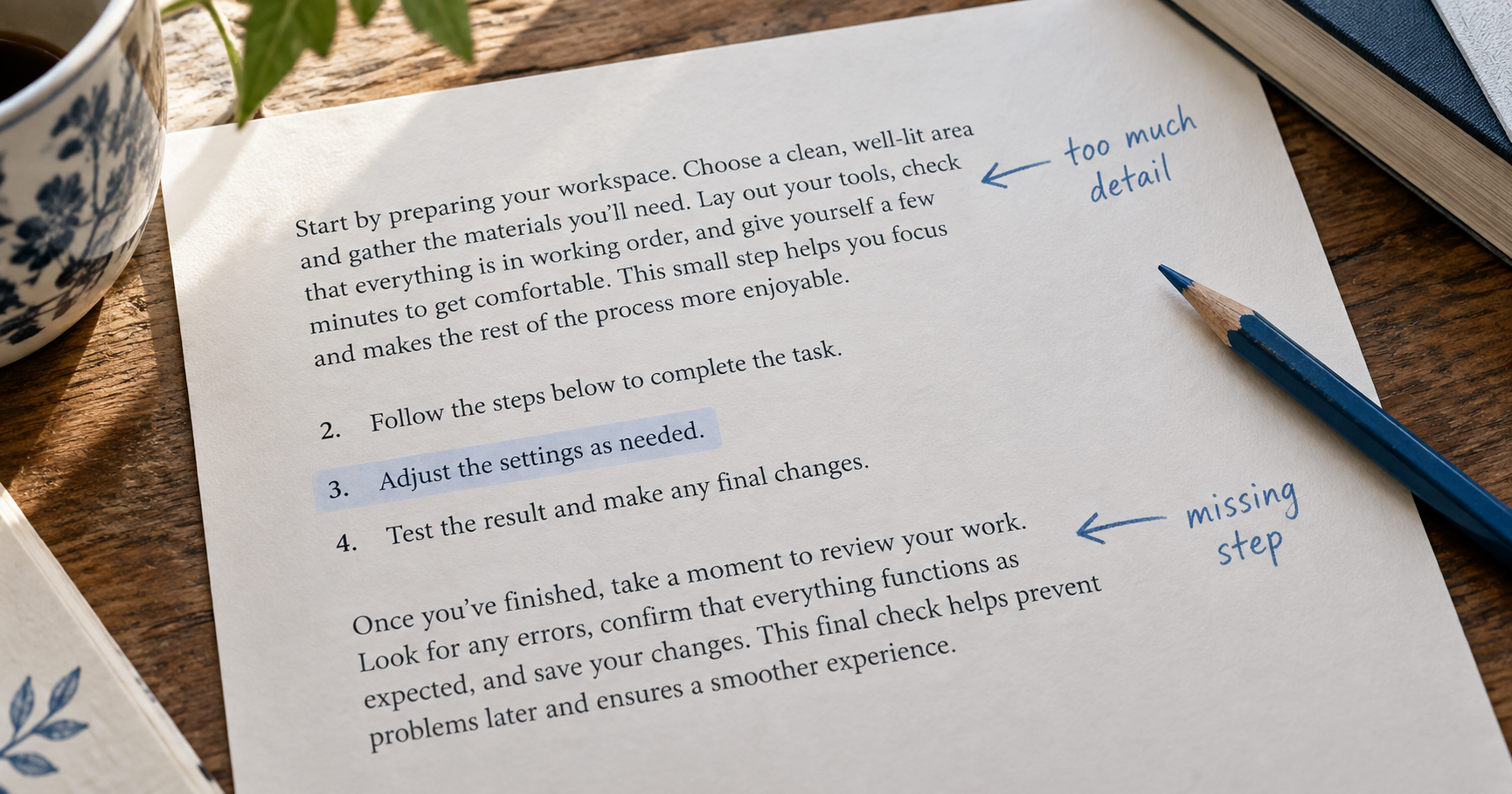
Reader feedback is useful when it helps you find where an article stopped helping someone. It isn’t automatically a set of instructions. Before rewriting a blog post, separate what the reader experienced from what they think caused it, then decide whether a change would better serve the person the post was written for.
That distinction gives you room to listen without handing every commenter the steering wheel. You can take a complaint seriously and still choose a different fix.
Find the experience inside the request
Suppose a reader says, “This is too long. Just give us a checklist.”
There are at least three things inside that sentence. The reader had trouble getting to something useful. They believe length caused the trouble. And they’re asking you to replace the article with a checklist.
Only the first part tells you directly about their experience. The diagnosis and the proposed remedy still need a look.
Ask a narrow follow-up if you can: “Which part were you trying to use, and where did you lose the thread?” That’s more useful than asking whether they liked the article. It gives you a place to investigate.
You might discover that the explanation is valuable, but the first practical instruction arrives much too late. Moving that instruction forward could solve the problem without removing the reasoning a beginner needs.
Two readers can disagree and both be telling you something true
Imagine an article about choosing a first blog topic. One reader says it overexplains the obvious. Another says they still don’t know how to choose between their three ideas.
Don’t average those requests into a slightly shorter article. Look at who the readers are and what they were trying to do.
The experienced reader may already know the setup. The beginner may need a worked comparison that the setup never provides. You could shorten the familiar background and add a small example of the actual decision. That gives the article less repetition and more help at the same time.
The editing decision comes from the article’s purpose, not from declaring one reader right. If that purpose is fuzzy, return to choosing one reader before you outline. Otherwise, every piece of feedback can pull the post toward a different job.
Give the feedback an appropriate home
I find it more useful to sort feedback by what it calls for than by whether it sounds positive or negative. Use these four destinations:
- Correct the claim. A reader identifies something inaccurate or outdated. Verify it against an appropriate source, correct it, and make a consequential correction visible where necessary.
- Repair the explanation. The intended reader can’t follow or apply an important part. Find the missing definition, example, transition, or step.
- Save a separate question. The request is worthwhile but belongs to another reader or a different promise. Keep it as a possible article, rather than widening this one indefinitely.
- Keep the current choice. The feedback reflects a preference that doesn’t improve this article’s purpose. Record why you’re keeping it so you don’t reopen the same decision every time.
One precise report can uncover a real defect. Ten vague reactions may tell you much less about what to change. Neither volume nor confidence establishes whether a factual claim is correct; check the underlying evidence.
Make one repair you can actually assess
Write a short revision note before you edit:
“The reader wanted to choose a topic but couldn’t compare their options. I’ll add one worked comparison immediately after the selection criteria. The revision succeeds if a new reader can explain why one option fits their situation better.”
Now make that change and read the relevant passage again. If the same reader is available, invite them to try the revised step. If they’re not, follow it yourself using a different example and record the limit: your own check is useful, but it isn’t independent reader confirmation.
Avoid changing the title, opening, examples, section order, and conclusion all at once unless the article really needs that much repair. With a narrow revision, you can explain what you changed and why. With a full rewrite, you may lose the part that was already working.
Close the loop without turning the reader into content
When someone helped identify a problem, a simple response is enough: “You were right that the comparison step was missing. I’ve added an example there.”
If you keep the original approach, explain the relevant boundary without arguing about taste. “This one is for a first-time writer, so I’m keeping the setup. Your question about a larger content library deserves its own treatment.”
Keep private emails and identifying details out of the article unless the sender has agreed to that use. You can improve an explanation without reproducing the person who struggled with it.
Take one piece of feedback you haven’t acted on. Write down the experience, the suggested diagnosis, and the requested remedy separately. Then choose the smallest change that helps your intended reader. Listening becomes much easier when you know what you’re listening for.