To restart an unfinished blog post, recover the decision behind it before you edit the sentences. Identify who it was meant to help, what it promised, what useful material is already there, and the next missing piece. Then resume at that gap instead of rewriting the introduction because it’s the first thing you see.
An old draft can feel strangely unfamiliar. You recognize your own words, but you can’t remember where you were going with them. That doesn’t necessarily mean the idea failed. You may simply have lost the handoff from the person who started it to the person opening it today.
Read once without fixing anything
Open the draft and give yourself one read to recover its purpose. Resist the tempting sentence edits. A cleaner opening won’t tell you whether the rest of the article still deserves to exist.
Write two short lines outside the draft:
The reader arrived because: …
They should leave able to: …
Use what the draft actually supports. If the title promises a complete launch plan but the useful material only helps someone choose a first topic, narrow the promise. You don’t owe the abandoned title a much larger article.
If you can’t complete those lines, collect the strongest notes into a small idea brief before continuing. The earlier guide to turning a messy idea into a post you can finish can help you recover that direction.
Separate usable work from remembered effort
Some paragraphs belong in the article because they help the reader. Others feel important because you remember how long they took to write. Those aren’t the same thing.
Mark the existing material in three ways: keep, check, and set aside. Keep the explanations and examples that still serve the recovered promise. Check claims, links, dates, product details, and anything whose accuracy may have changed. Set aside tangents and attractive passages that solve another problem.
Keep the set-aside material in the working file for now. You can remove it from the article without pretending the effort never happened. But don’t carry it back into the draft merely to justify the time you spent on it.
This is also where a return after a long break differs from an ordinary editing pass. You aren’t just improving language. You’re deciding whether the evidence and the purpose still hold together.
Resume at the first unfinished decision
Imagine you left a draft about choosing between three blog ideas. You have a clear reader, a useful explanation of why focus matters, and three selection criteria. What you don’t have is a demonstration of using those criteria.
The next task is to compare three sample ideas. It isn’t to make the first paragraph more exciting.
Write the missing explanation roughly enough to see whether it works. Can the reader follow the choice? Does the example expose a missing condition? If so, repair the condition before polishing the prose around it.
You may discover that only one section was keeping the entire article from being usable. Or you may discover that the material doesn’t support the promise at all. Either finding is more valuable than another hour spent refining sentences whose role remains uncertain.
Leave a note your future self can use
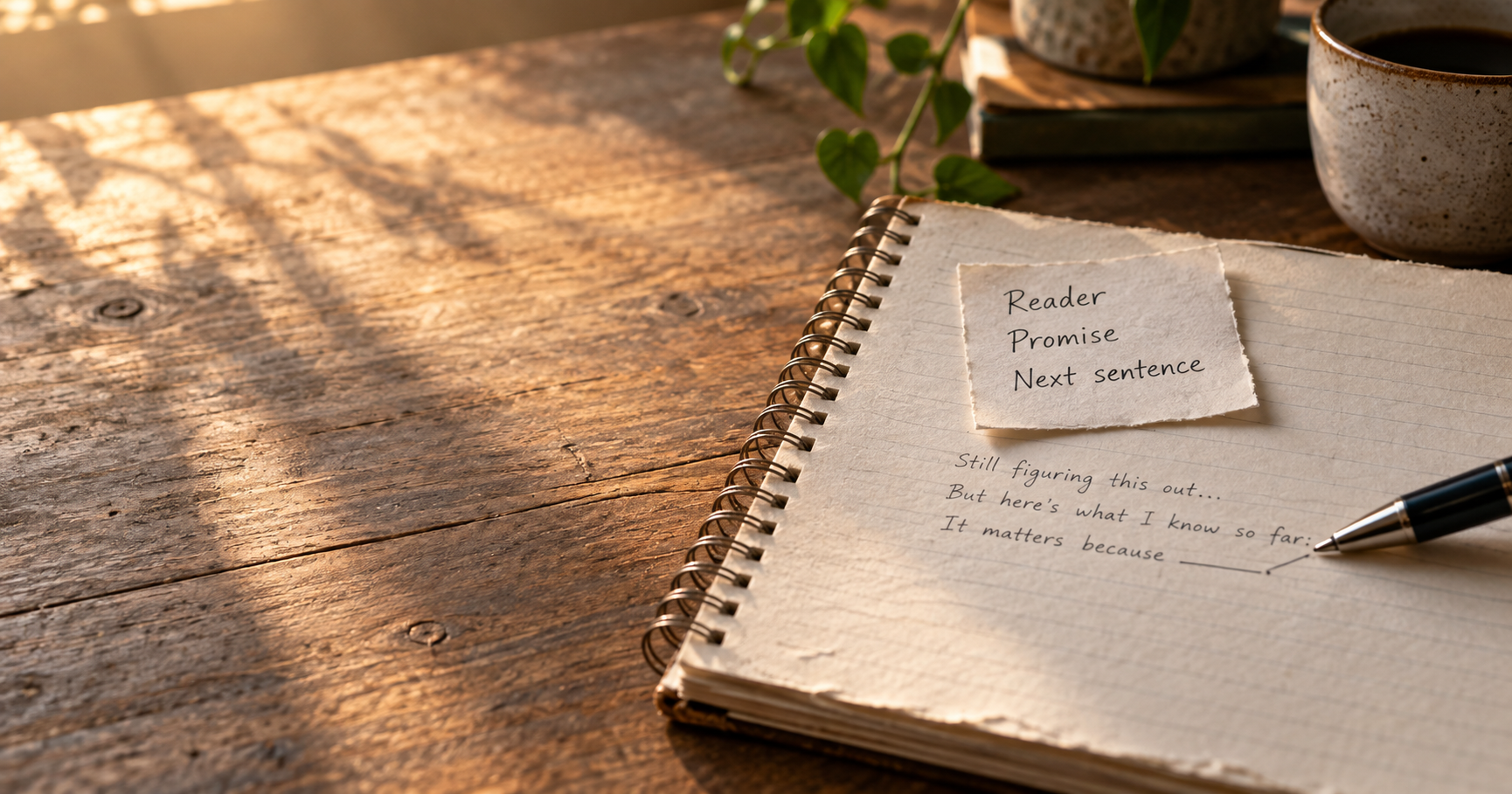
Before closing the draft again, add a short working note above the article, clearly separated from publishable content. Here’s an illustrative handoff:
Reader: A new blogger choosing among three topic ideas.
Promise: Help them select one topic they can support and finish.
Keep: The three selection criteria and the gardening example.
Check: Whether the linked source is still current.
Next writing move: Show why the narrower gardening question fits this reader better than the broad lifestyle idea.
Done when: The reader can explain their choice and begin a focused outline.
Notice how different that is from “finish post.” A useful handoff tells you where judgment stopped. You shouldn’t have to reconstruct the whole session to do the next piece of work.
Remove working notes before the article goes into WordPress. They help you write; they aren’t part of the reader’s answer.
Sometimes the right recovery is retirement
Keep going when the draft still has a useful promise and you can name a manageable next step. Narrow it when the good material supports a smaller answer. Set it aside when another published article already resolves the same need, the essential evidence is unavailable, or the question no longer matters to your readers.
Retiring a draft is a choice about the work ahead. It doesn’t erase the work behind you, and completing an article nobody needs won’t recover that time.
Choose one unfinished post and recover its two-line promise. Don’t start by asking whether you can finish it today. Ask whether you can identify the next useful writing move. That’s enough to turn an abandoned file back into work you can actually do.